

By Hadas Levi, Senior Product Manager, C3 Code, C3 AI
A 2025 report from the Massachusetts Institute of Technology (MIT), The GenAI Divide, found that about 95 percent of enterprise generative AI efforts show no measurable return. One major reason for this is the difficulty in the “last mile” work in Enterprise AI application development: connecting live enterprise data, modeling how the business operates, enforcing access controls, and launching the solution on time and within budget. General purpose coding tools can produce code quickly, but enterprises are still left to build the rest of the application architecture themselves.
That prototype-to-production gap becomes especially consequential when designing software to solve for a large, complex problem like materials sourcing in data center construction. A massive physical infrastructure buildout is underway to support the hockey-stick growth path happening in AI usage across every sector. This buildout runs on hardware, and hardware runs on commodities. A single rack of accelerators (the specialized computer chips that power AI computation and sit inside data centers) carries thousands of dollars of copper, aluminum, and specialized silicon, all exposed to market prices that move with global events. For the teams sourcing those parts, three questions matter above all else: how much a part should cost, who to buy it from, and how that price changes when the market moves.
C3 Code was designed to solve that last-mile problem. You describe what you want, your ideal outcome or application, in plain language, and autonomous agents build it on the C3 Agentic AI Platform, C3 AI’s foundation for building, deploying, and governing Enterprise AI applications. All applications built with C3 Code are grounded in an enterprise ontology (a structured model of your data, powered by the C3 AI Type System, that connects the business entities, processes, and relationships that are crucial to how your business functions), and governed from the first prompt.
We worked with a data center company to point C3 Code at this sourcing problem, and created an application to solve it in 72 hours. Here is how it came together.
Sourcing at Data Center Scale Breaks Spreadsheets
Sourcing the commodities behind a data center buildout is a calculation that has to be re-solved every time the market shifts. The inputs are interdependent and each moves on its own schedule, so the moment a sourcing team commits an answer to a spreadsheet, the world it described has already changed underneath it. Five forces make this problem resist any static model:
- Prices are indexed to commodities. A machined bracket or a copper busbar has no fixed price. Its cost tracks an underlying index, so a negotiated quote drifts out of date as that index moves.
- Landed cost is not unit price. The real cost of a supplier adds tariffs, which shift with trade policy, and shipping on top of the base price. Two suppliers with the same base price can land at very different totals.
- Sourcing is a constrained problem. Teams can’t pick the cheapest supplier for every part. Suppliers have capacity limits, you often want more than one source, and some carry risk flags or long lead times that rule them out.
- Risk is external and fast. A strike, a sanction, or a shipping-lane disruption can invalidate a plan overnight. That signal lives externally in the news.
- The analysis is trapped. Creating a defensible recommendation typically requires a sourcing expert with a spreadsheet, and many stakeholders lack the knowledge or context to question it.
An effective sourcing optimization application needs to hold all that information at once, in a neatly packaged design. A custom, ground-up build would require months of integration work. C3 Code assembled it in less than one work week.
From Prompt to Full Stack
The data center sourcing team started by describing their ideal application in plain, conversational language. C3 Code laid out a build plan, then got to work configuring. Each component appeared in the C3 AI Studio (the graphical workspace within the C3 Agentic AI Platform for building, testing, and deploying applications), as it was completed.
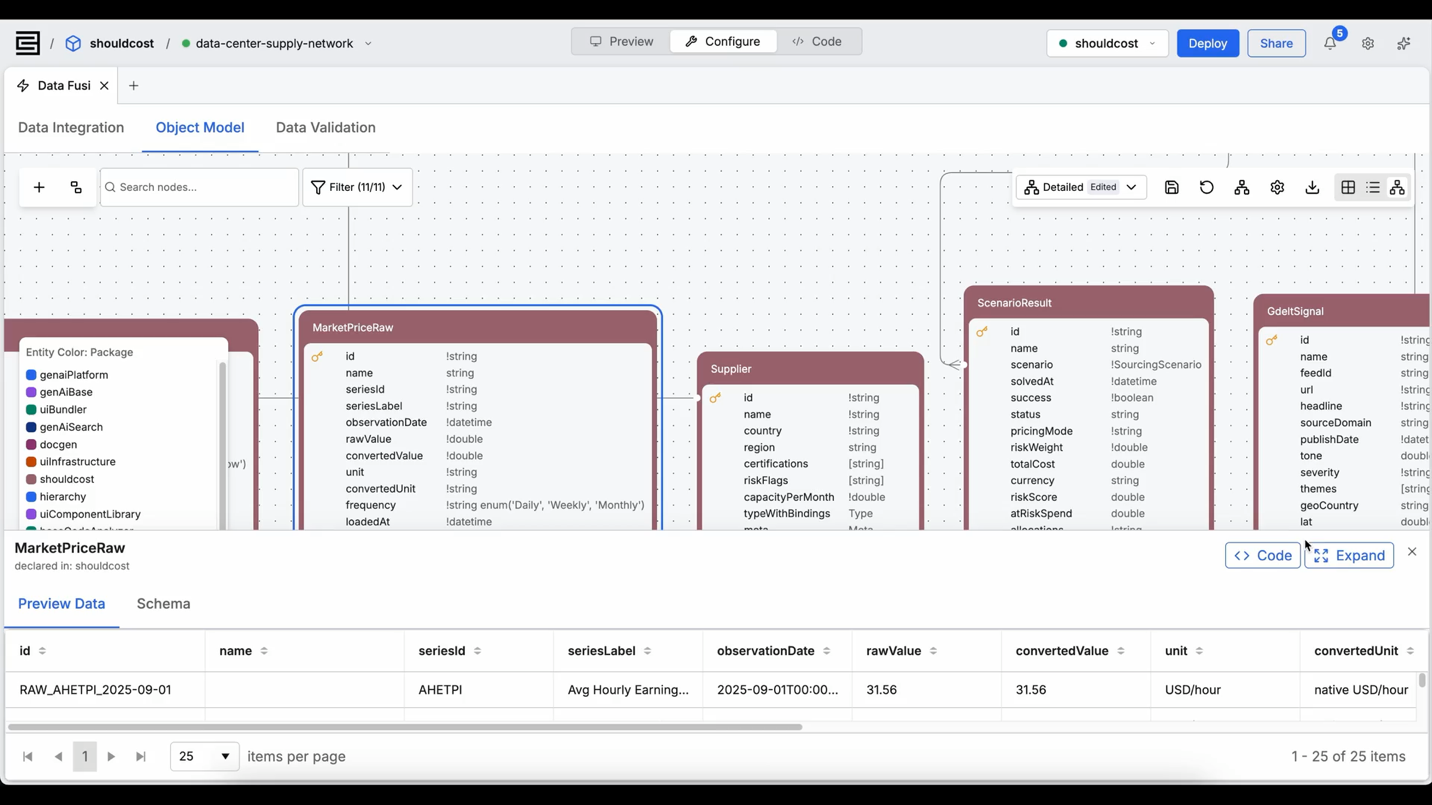
Figure 1: The C3 Code build plan in C3 AI Studio. What normally takes months of integration work happens in a single 75-second run — C3 Code plans the build and assembles the full stack (the data model, live data, 3D views, and optimizer), component by component, in C3 AI Studio.
The foundation came first. C3 Code generated the data model the application stands on: entities for parts, suppliers, quotes, and market prices, with keys and relationships, assembled as one connected ontology rather than loose rows in a table. The data model enables every subsequent build step to reason about real assets and their relationships.
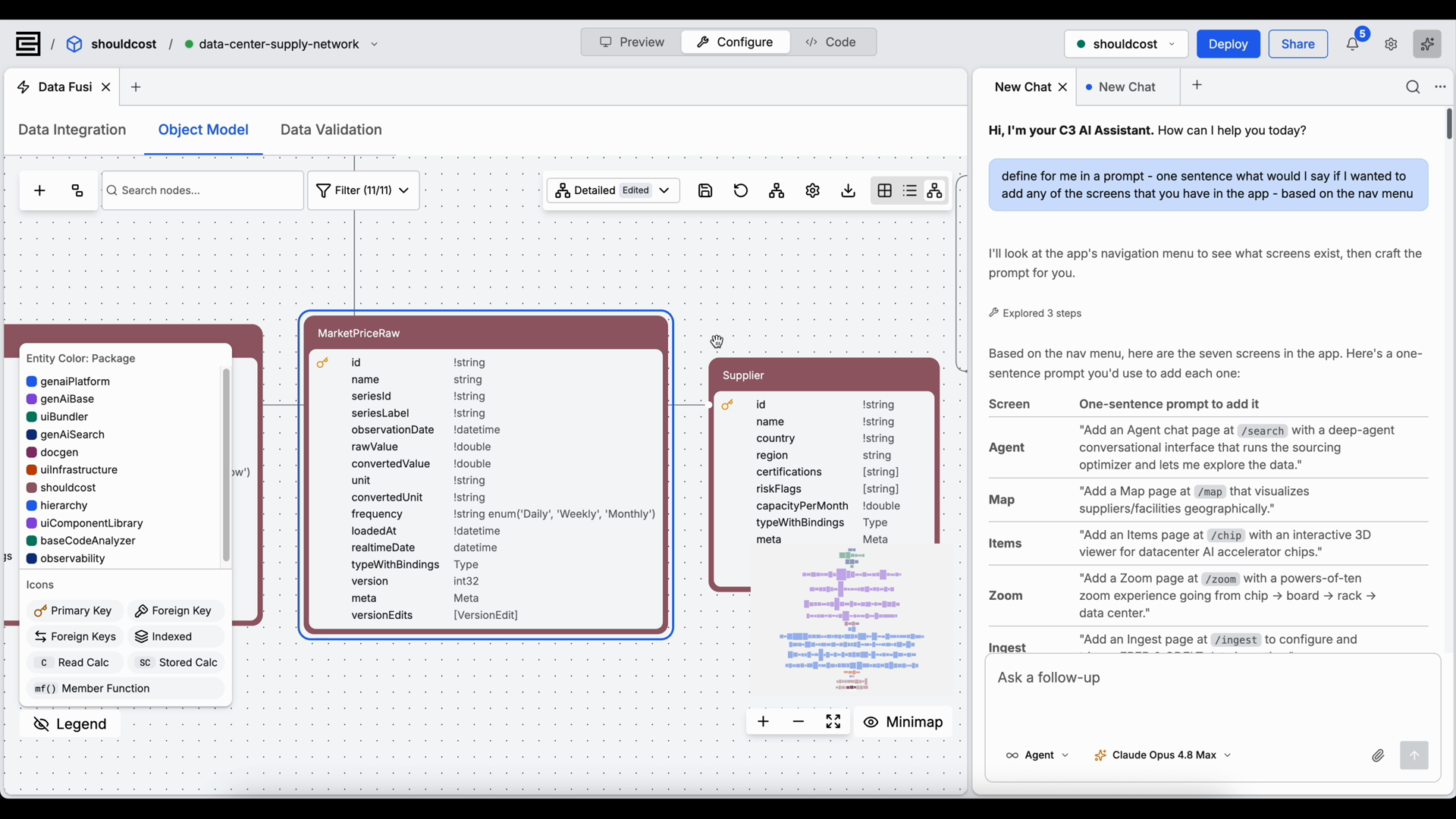
Figure 2: The generated data model. Because parts, suppliers, and prices are modeled as one connected ontology rather than loose rows, every later step can reason about real assets and their relationships.
C3 Code then pulled in live data, like commodity and economic series from FRED, the Federal Reserve's public data service, and pivoted them into a daily table of prices the model can read. The solution displayed real-time part costs reflected by today's market, so the sourcing team was working from an up-to-date source of truth.
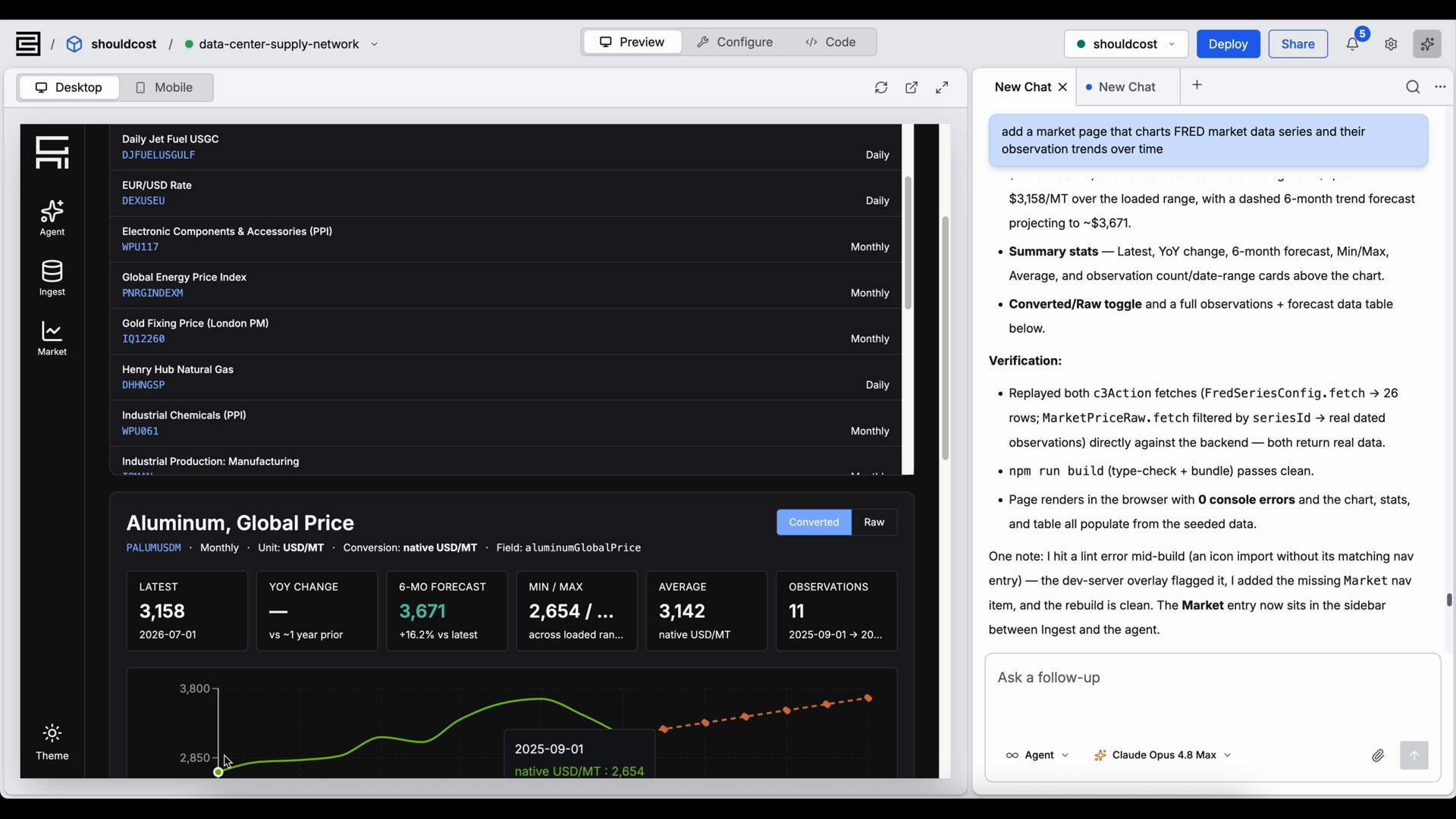
Figure 3: Live commodity and economic series from FRED, pivoted into prices the application reads. Every part cost reflects today's market instead of the day its quote was signed.
Then, the physical picture: C3 Code generated interactive 3D views that tie a data center's hardware to its sourcing and cost data, from chip to board to rack. Copper, which carries the power and cooling load of every AI rack, from busbars and cabling to the cold-plates that cool each chip, shows up in the 3D view down to the individual component. Users can click into a rack and see every copper part in its bill of materials, each one priced at today’s market rate.
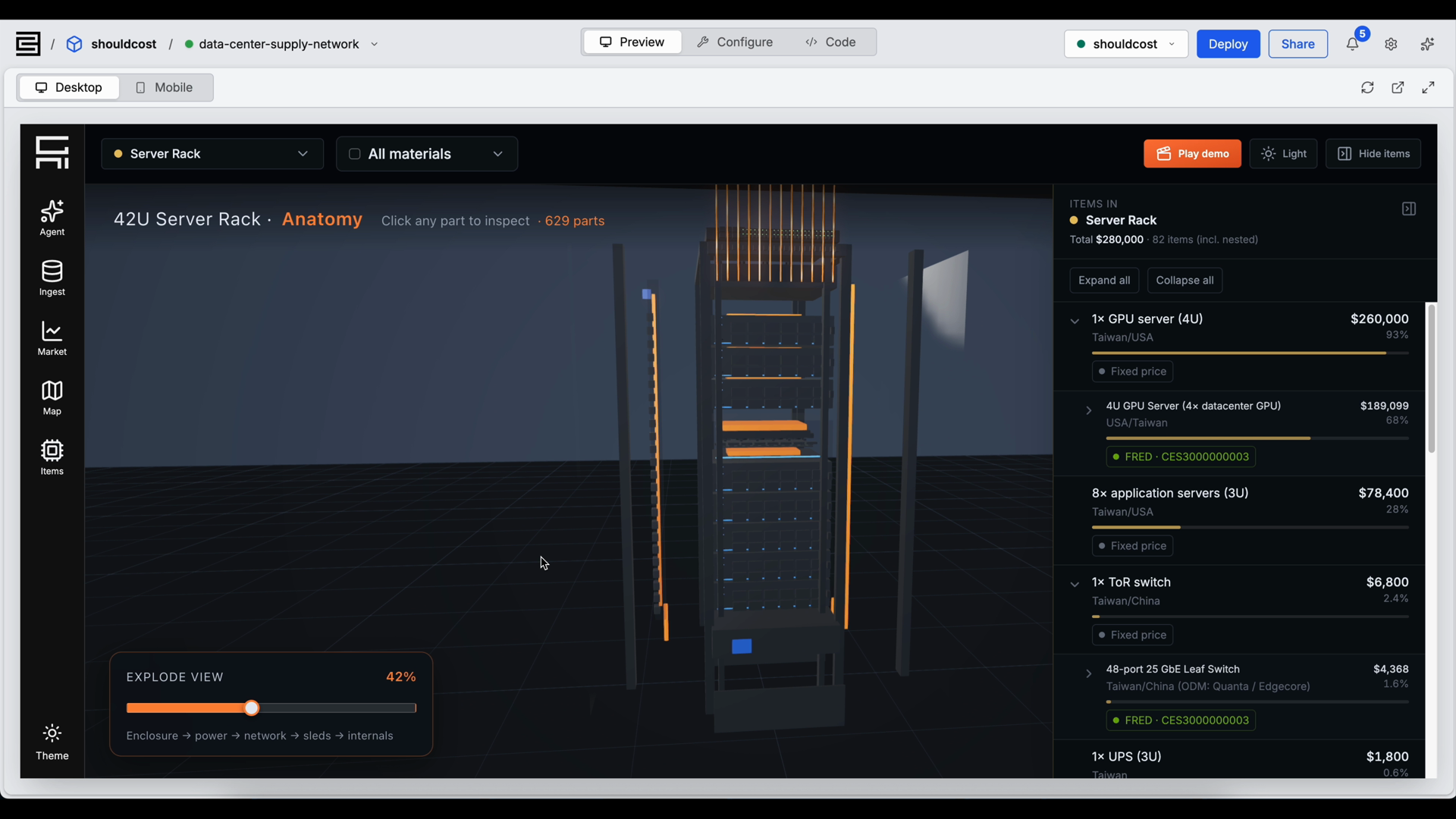
Figure 4: A priced bill of materials, from chip to rack, with copper visible down to the part. A buyer can trace costs and see exactly where the money sits, no separate costing spreadsheet required.
C3 Code also built a global map of suppliers and materials, a news pipeline that watches for supply chain risk, and an intuitive interface to search and query all this information. None of these application components were wired manually — the team watched C3 Code assemble it all on the C3 Agentic AI Platform.
Inside the Sourcing Optimizer
The analytical heart of the application is a sourcing optimizer, an algorithm that weighs cost, capacity, and risk together to recommend which suppliers to buy from. It answers the central question: given everything we know right now, what is the least expensive way to buy these parts?
The optimizer starts by re-pricing every quote. A quote's base price is scaled by how far its commodity index has moved since the quote was struck, then tariffs and shipping are layered on top. The result is the true landed cost of that supplier, today.
Then it solves. The optimizer is a mixed-integer linear program — it searches the valid combinations of variables and returns the cheapest one that obeys the constraints. It runs three ways: against today's spot prices; against a six-month forecast, so a team can act on where prices are heading; or against a what-if scenario, where you ask what happens if copper rises 20 percent or a country's tariff jumps to 60 percent, and watch the plan re-solve.
The optimizer works to meet demand while respecting each supplier's capacity and honoring a diversification rule that keeps any single supplier from owning too much of a part. It drops suppliers with excessive lead times or excluded risk flags before the solve begins. The system’s recommendations are transparent and traceable by design, showing the share, the quantity, the effective price, and which market value drove it. It even reports the marginal cost of one more unit of each part, so a buyer can see where the next dollar goes.
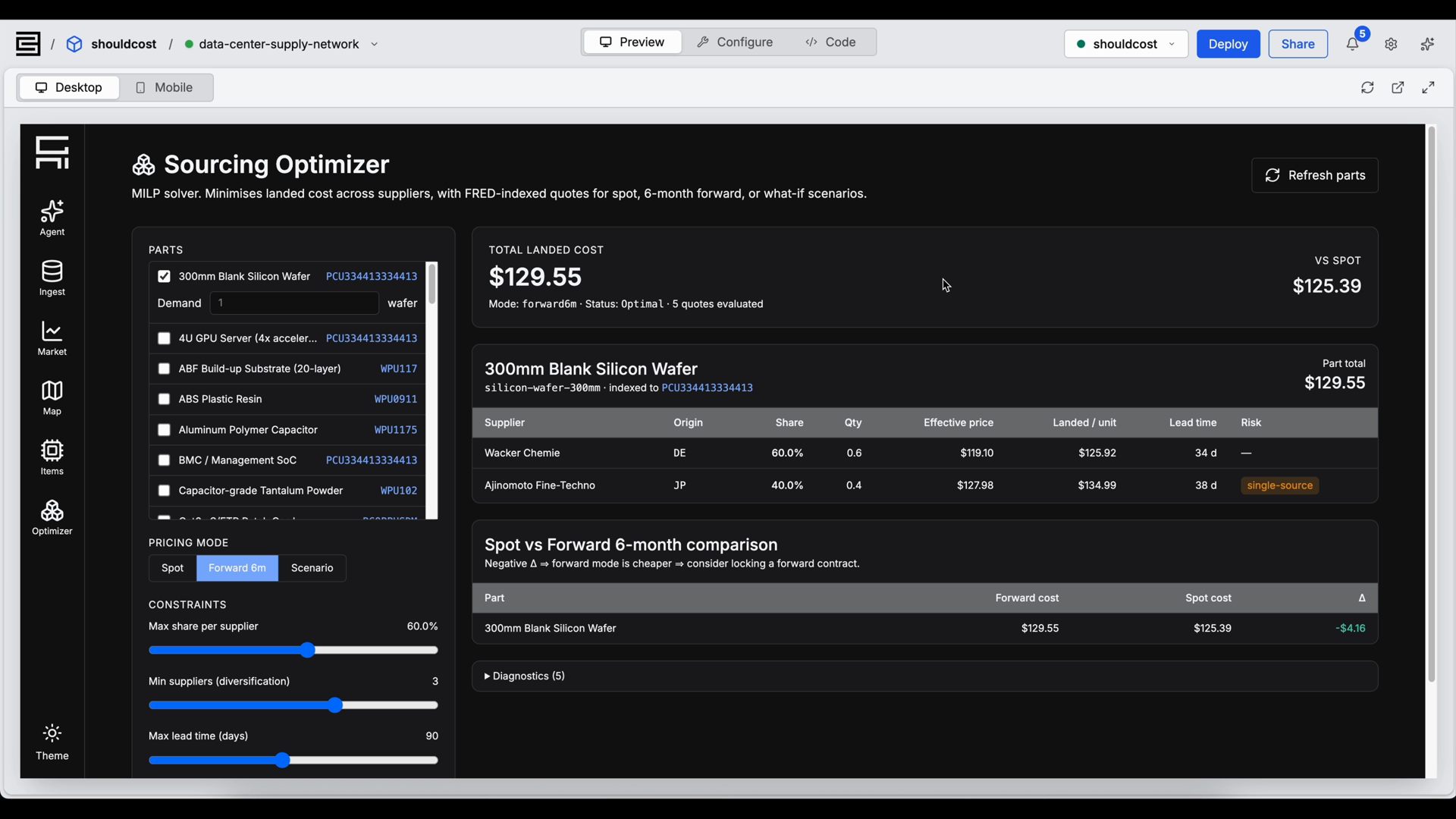
Figure 5: The least landed-cost supplier mix under real capacity and diversification limits. This hands the team a defensible buy plan in one solve, showing the cheapest compliant supplier mix for today and for a 6-month forward view.
The sourcing optimizer provides dynamic, precise recommendations a sourcing team can act on immediately, with confidence, rather than working from a fragile spreadsheet model that would take days to rebuild when copper moves or a supplier’s capacity falls.
A Conversational Agent for Non-Experts
To make the application usable by someone who is not a cost engineer, C3 Code built a conversational agent into the user interface.
The agent performs tasks like running the optimizer, previewing prices for a single part, querying the data model, and producing charts, all from a plain-language request. Ask it to optimize a copper cold-plate for a thousand tons a month at spot pricing with a two-source rule, and it runs the optimization and returns the result. The agent plans its work, streams its progress as it goes, and keeps notes and memory across sessions.
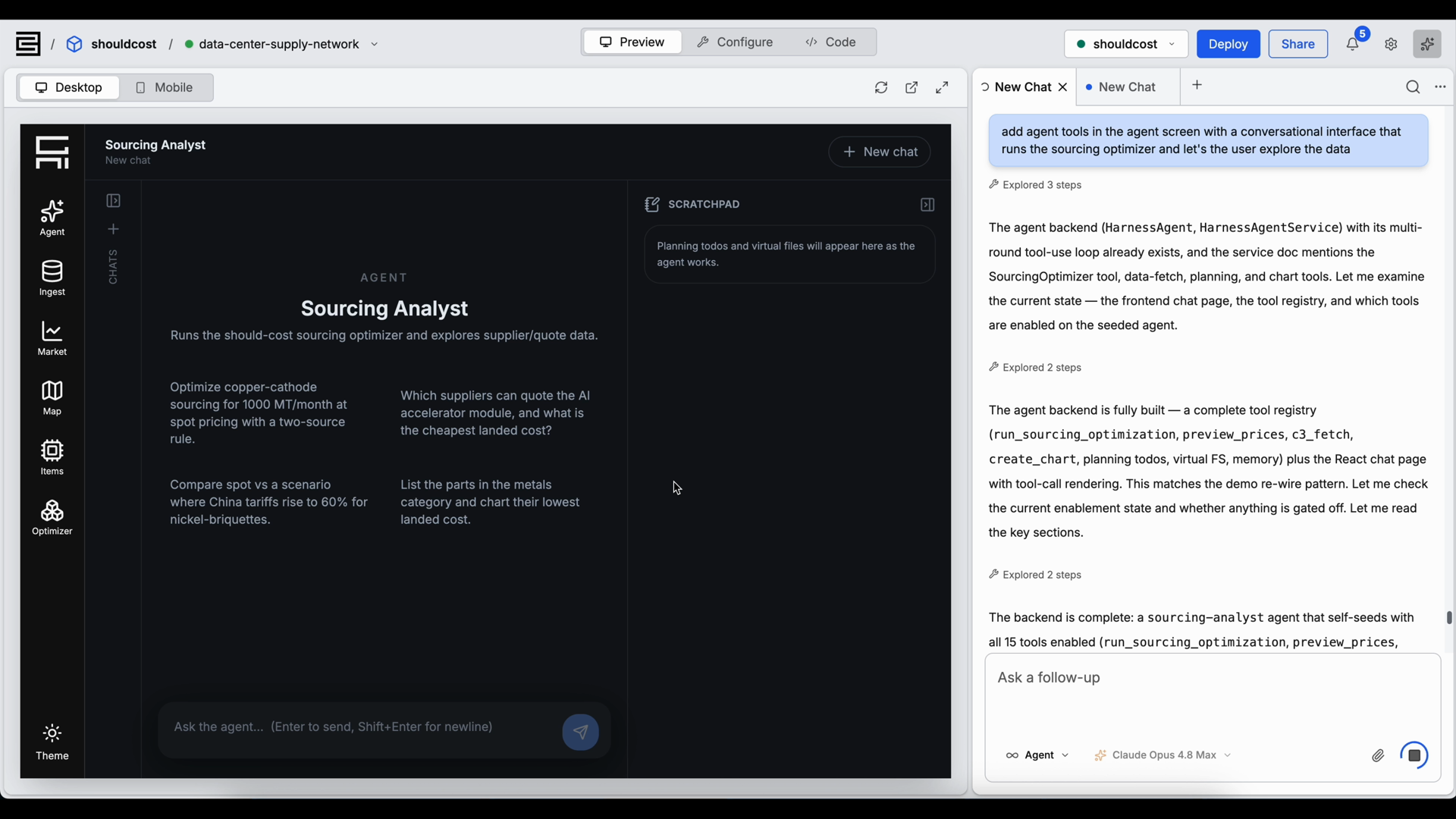
Figure 7: A conversational agent runs the optimizer and explores the data through natural language prompting.
A procurement lead can now get a defensible sourcing answer by asking for it directly in the app. The expertise lives in the application for all to access and work from, rather than in one analyst’s static spreadsheet.
Why C3 Code Apps Hold Up in Production
A working demo with strong features may be compelling, but it’s not the same as software an enterprise can run. The outputs from a general-purpose coding agent rarely hold together well enough to deploy. C3 Code starts instead from proven enterprise components and a domain ontology, so access controls, deployment, and audit trails are in place from the first prompt rather than bolted on afterward. The sourcing application above is not a prototype; it is production software that a procurement team can put to work. The sourcing team is not an isolated case. Builders at companies across manufacturing, materials, and heavy industry have taken the same path from prompt to production, and they describe the experience in similar terms:
“It took me about four to five hours in total to have a working model. I was blown away.”
— A C3 Code builder at Cargill
“If I give C3 Code a task, it just goes and gets the work done.”
— A C3 Code builder at Nucor
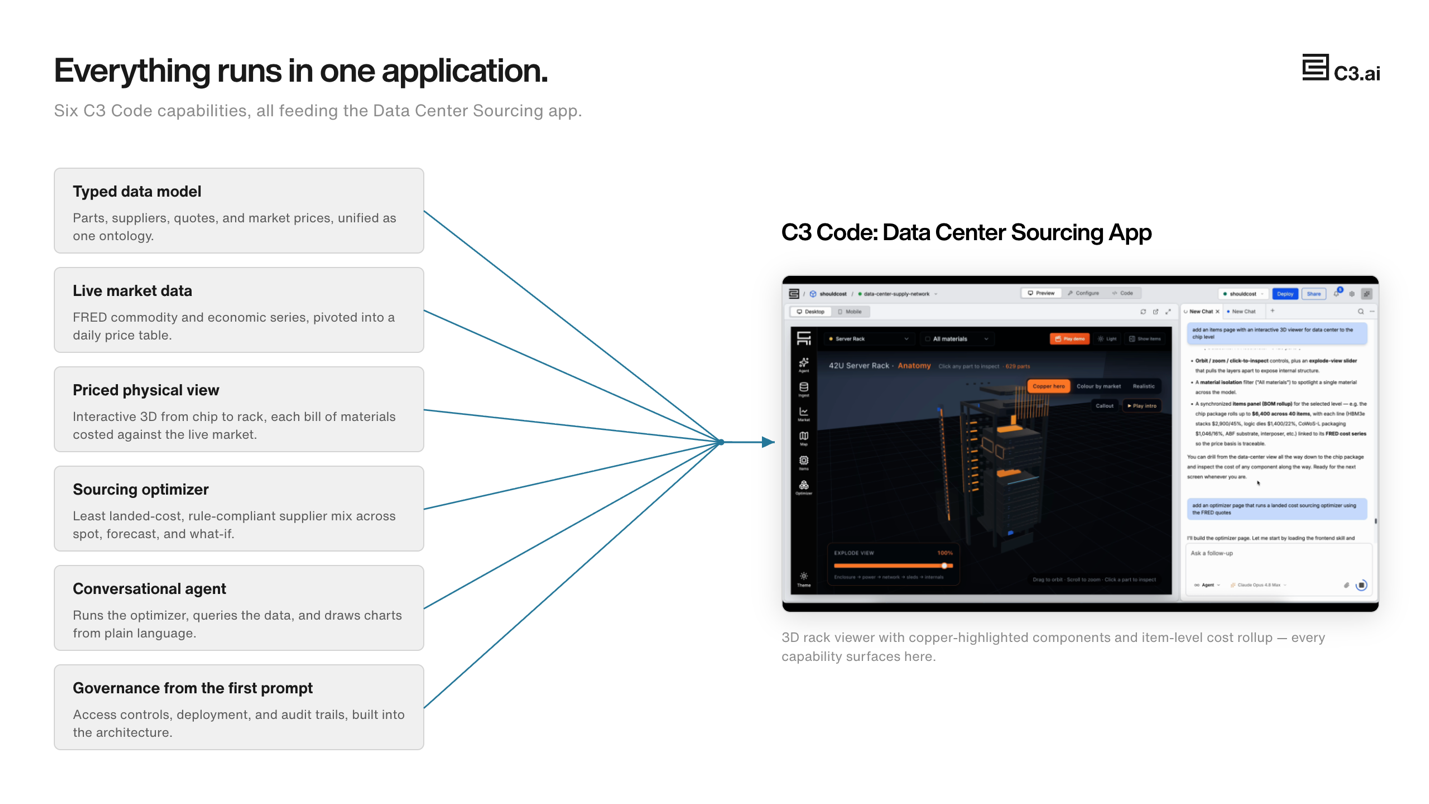
Figure 8: The data center sourcing application on one page. Six capabilities that would each be its own project — a typed data model, live market data, a priced 3D view, the sourcing optimizer, a conversational agent, and governance from the first prompt — ship as one application built in days by C3 Code.
The MIT finding that most Enterprise AI efforts show no measurable return is a last-mile problem: the demo works, but the data model, the governance, and the deployment never get built, so the work never reaches production. C3 Code closes that last mile by default. The sourcing application is one instance of a general pattern — the same approach builds a reliability model for a manufacturer, a claims workflow for an insurer, or a risk monitor for a logistics team, each grounded in that organization's own data and governed from the first prompt.
Build Your Own App in a Day
If this approach resonated, join our AI Accelerator, a hands-on masterclass where you bring a real business problem and your own data, and leave with a working Enterprise AI application built with C3 Code, plus the skills to build the next one.
September 23, 2026, 8:30 AM to 5:30 PM. C3 AI Headquarters, 1400 Seaport Blvd, Redwood City, CA 94063.
Seats are limited. Register to build at c3.ai/events/ai-accelerator/.
Authors
Hadas Levi is a Senior Product Manager at C3 AI, where he leads the development of C3 Code. He previously worked at Walmart and SolarEdge, driving large-scale supply chain and manufacturing optimization initiatives. Hadas holds an MBA from the Haas School of Business at the University of California, Berkeley, a master’s degree in environmental studies from Tel Aviv University, and a bachelor’s degree in business administration and political science.
Source: A. Challapally, C. Pease, R. Raskar, and P. Chari, The GenAI Divide: State of AI in Business 2025, MIT NANDA, July 2025.