


Runtimes and Compute Requirements
Machine Learning Libraries
Some of the earliest machine learning applications involved consumer-facing use cases developed by companies like Google, Amazon, LinkedIn, Facebook, and Yahoo. Machine learning practitioners at these companies applied their skills to improve search engine results, advertisement placement and click-throughs, and advanced recommender systems for products and offerings.
Many of the machine learning practitioners from these companies, as well as many in the academic community, embraced the open source software model, in which contributors would make their source code for core underlying technical capabilities freely available to the broader community of scientists and developers. The idea was that these contributions would encourage the pace of innovation for all.
As a result of this early work and the ongoing commitment to open source technology, data scientists and machine learning engineers now have a wide variety of machine learning libraries, languages, and infrastructure options to develop applications. Many core machine learning libraries today – including scikit-learn, SciPy, Pandas, and NumPy – began to emerge as the open source standard.
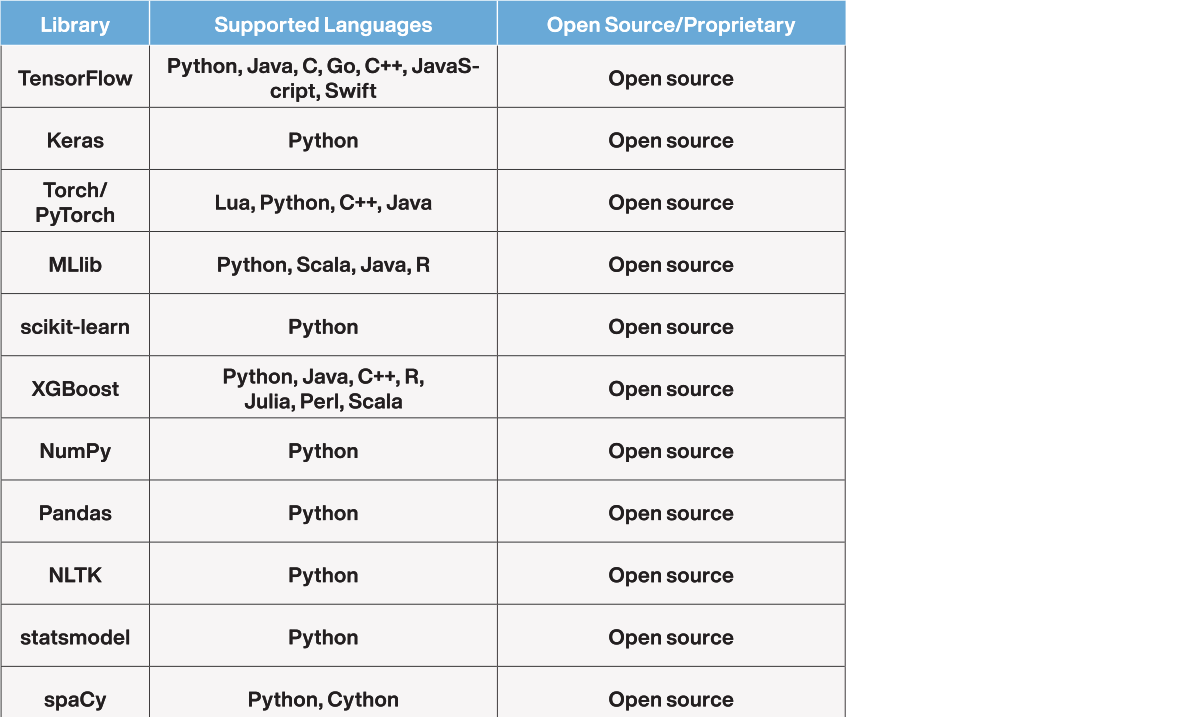
Table 4. Commonly used machine learning libraries
Machine learning libraries enable data scientists to rapidly train and test new models without having to write all of an algorithm’s code from scratch. Python has emerged as the machine learning language of choice; a significant share of source code contributions have included Python libraries and tools.