






CHARM: A Foundation Model for Time-Series Embeddings
Turn complex time-series data into scalable, reusable embeddings built for real-world AI systems
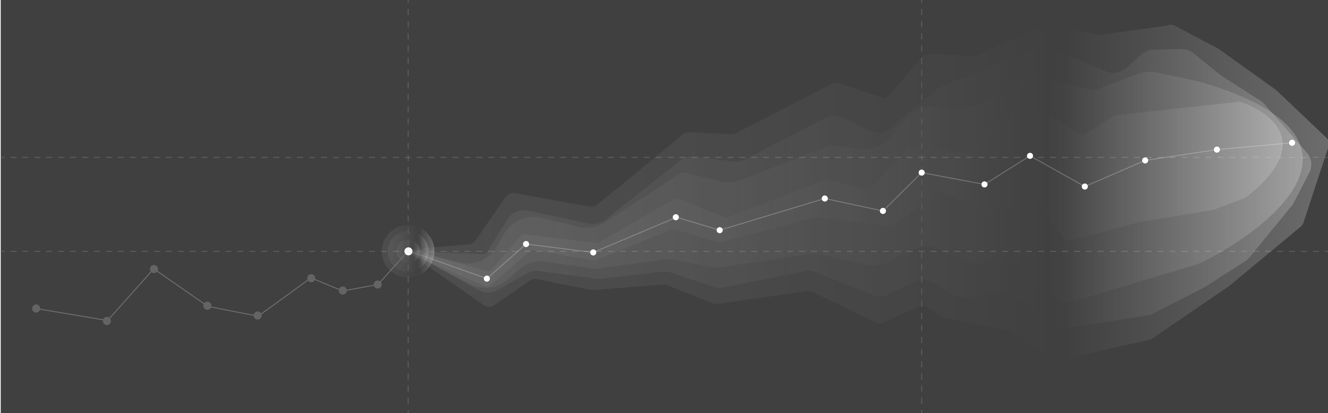
CHARM (Channel-Aware Representation Model)
A purpose-built foundation embedding model designed to generalize across domains, accelerate development, and power forecasting, anomaly detection, optimization, and other mission-critical time-series applications — without rebuilding models from scratch.
Anomaly detection: Identify unusual patterns in time series data
Clustering: Group similar time series together
Classification: Categorize time series into predefined classes
Forecasting: Improve time series predictions
Similarity search: Find similar patterns across large datasets



Getting Started
CHARM is currently available in private preview.
Interested in early access? Request Now
Once your access is approved, follow the instructions below to install the Python SDK and get started. The SDK enables you to interact directly with the CHARM time-series embedding model and generate scalable embeddings from multivariate time series data.
Creating and Exporting API Key
Please contact us using the form below to receive a CHARM API key. Be sure to store your key securely, such as in your .zshrc file or another protected environment configuration.
Create an .env File
Create an .env file in your project directory and export it as an environment variable:
This allows you to keep your credentials separate from your code and avoid hardcoding sensitive information.
CHARM_API_KEY=your-api-key CHARM_BASE_URL=https://ftse.c3ci.cloud/ftseInstall CHARM SDK
In order to use CHARM API using Python, you can install CHARM SDK for Python using pip:
pip install c3-charm
Using CHARM
from c3-charm import CharmClient
from dotenv import load_dotenv
import os

# Load environment variables from .env file
load_dotenv()
# Get API key and base URL from environment variables
api_key = os.getenv("CHARM_API_KEY", "your-api-key")
base_url = os.getenv("CHARM_BASE_URL", "https://ftse.c3ci.cloud/ftse")

# Create a client
client = CharmClient(
    base_url=base_url,
    api_key=api_key,
    timeout=30,         # Increased timeout for potentially large requests
    max_retries=3       # Automatically retry failed requests
)
# Generate embeddings for time series data
response = client.embeddings.create(
    descriptions=[["engine", "temperature"], ["fan", "speed"]],
    ts_array=[
    # First time series (10 timesteps, 2 channels)
            [
                [0.1, 0.2], [0.3, 0.4], [0.5, 0.6], [0.7, 0.8], [0.9, 1.0],
                [1.1, 1.2], [1.3, 1.4], [1.5, 1.6], [1.7, 1.8], [1.9, 2.0]
            ],
    # Second time series (10 timesteps, 2 channels)
            [
                [2.1, 2.2], [2.3, 2.4], [2.5, 2.6], [2.7, 2.8], [2.9, 3.0],
                [3.1, 3.2], [3.3, 3.4], [3.5, 3.6], [3.7, 3.8], [3.9, 4.0]
            ]
        ],
    return_tensors="np",  # Options: "list", "np", "torch"
)
# Access the embeddings
embeddings = response.embeds
print(f"Model: {response.model}")
print(f"Embeddings shape: {embeddings.shape}")
Using the API
Synchronous Method
(client.embeddings.create): Suitable for smaller datasets or when simplicity is preferred. Processes batches sequentially, which can be slow for large datasets. Now includes progress tracking with tqdm. Avoid sending very large batches (>100 samples) in a single request to prevent timeouts.
Asynchronous Method
(client.embeddings..async_create): Recommended for large datasets. Significantly faster due to concurrent processing with features like:
- Parallel batch processing
- Bounded concurrency to avoid overwhelming the server
- Progress tracking for long-running operations
- HTTP/2 support for efficient connections
Get Early Access
Support
Community & FAQ
Initial Production Deployment. In Weeks.
Cut through complexity and deliver results fast with C3 AI.
Our expert-led C3 AI Initial Production deployment gets your agentic AI application into production in just twelve weeks.